
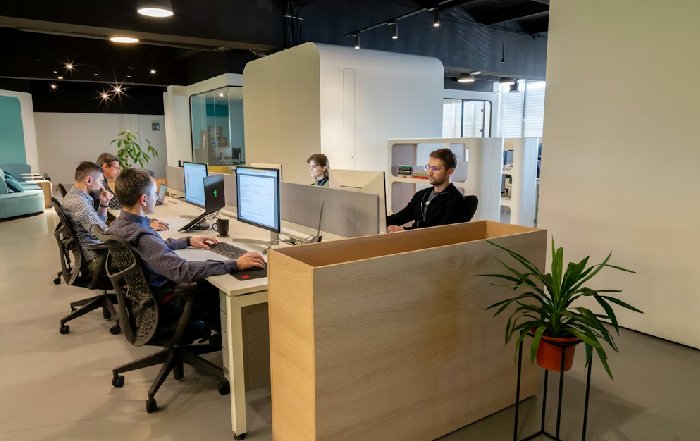
Deep Work Protocols for Open-Office Environments in 2026
Why Deep Work Has Become a Strategic Imperative
By 2026, leaders across North America, Europe, Asia and beyond have largely accepted that the core constraint on growth is no longer capital or even technology, but focused human attention. In a world of constant notifications, hybrid work, and open-plan offices, the ability of knowledge workers to perform deep, cognitively demanding work has become a decisive competitive advantage for organizations in the United States, the United Kingdom, Germany, Singapore, Australia and other innovation-driven economies. For readers of BusinessReadr, this shift is not an abstract idea; it is visible in quarterly results, employee engagement surveys, and the struggle to ship complex projects on time.
Deep work, popularized by computer science professor Cal Newport, refers to professional activities performed in a state of distraction-free concentration that push cognitive capabilities to their limit and create new value. Research from organizations such as McKinsey & Company indicates that knowledge workers spend a significant portion of their time on low-value communication and coordination tasks rather than high-impact, strategic work that drives differentiation and growth. Learn more about how high-performing organizations are rethinking productivity and value creation on BusinessReadr's productivity insights.
The paradox is that while leaders increasingly demand deep work, many have simultaneously adopted open-office layouts and hyper-connected digital workflows that structurally undermine it. The challenge for executives, founders, and managers in 2026 is not simply to encourage focus, but to design explicit, operational deep work protocols that function reliably in noisy, interruption-prone open-office environments from New York to London, Berlin, Toronto, Singapore, and São Paulo.
The Hidden Cost of Open Offices on Cognitive Performance
Open offices were originally promoted as a way to enhance collaboration, flatten hierarchies, and reduce real estate costs. Yet over the past decade, multiple studies have documented their unintended consequences. Research published by Harvard Business School found that open-plan offices can actually reduce face-to-face interaction while increasing electronic communication and perceived distraction. Further evidence from the British Psychological Society suggests that persistent noise and visual interruptions degrade working memory and problem-solving, particularly for tasks that require complex reasoning or creativity.
These findings align with broader neuroscience research from institutions such as MIT and Stanford University, which shows that context switching and interruptions impose a measurable cognitive tax. Each time employees in an open office are interrupted-by a colleague's question, a notification, or ambient conversation-they pay a switching cost in time and mental energy to re-immerse themselves in the task. Over the course of a day, this can erode both output quality and well-being. Learn more about the cognitive costs of multitasking and distraction from research summarized by the American Psychological Association at apa.org.
For leaders seeking to build resilient, high-performance organizations, this presents a structural risk. When high-skill employees in finance, engineering, product management, law, consulting, or design are unable to access sustained concentration, organizations in the United States, Europe, and Asia effectively squander their most expensive resource: expert attention. This is where deep work protocols become not a perk, but a governance and strategy issue, closely connected to the decisions leaders make about organizational design and culture. Readers can explore how structural choices shape execution and focus in BusinessReadr's strategy section.
From Individual Habit to Organizational Protocol
Many professionals have tried to protect their focus with personal tactics such as noise-cancelling headphones, calendar blocking, or early-morning work sessions. While useful, these approaches are insufficient in open offices because they rely on individual willpower in an environment that is structurally optimized for interruption. To be effective at scale in 2026, deep work must be institutionalized as a shared protocol, backed by leadership, embedded in management practices, and supported by technology and workspace design.
This shift from individual habit to organizational protocol reflects a broader evolution in management thinking. Just as safety, compliance, and cybersecurity have moved from individual responsibility to systemic governance, cognitive focus is now being recognized as a collective asset. Many forward-thinking organizations in Germany, Sweden, Canada, and Japan have begun to treat deep work as a protected, schedulable resource, not an ad-hoc activity that workers must carve out in their spare moments. For leaders seeking to operationalize this shift, BusinessReadr's leadership resources provide practical frameworks for moving from aspiration to implementation.
The most successful implementations of deep work protocols share several characteristics: they are explicit rather than informal; they are visible in calendars and team norms; they are reinforced by managers; and they are measurable in terms of outcomes such as project throughput, error rates, and employee engagement. This systems mindset aligns with modern management approaches discussed in BusinessReadr's management coverage, where process design is treated as a lever for strategic advantage.
Designing Deep Work Time in an Open Office
The first pillar of an effective protocol is time. In open offices across major business hubs such as London, Amsterdam, Zurich, Seoul, and Sydney, the default pattern of constant availability must be replaced with a more deliberate rhythm that alternates between deep work and collaborative work. This does not mean eliminating collaboration; rather, it involves scheduling it more thoughtfully to protect uninterrupted blocks of focused time.
Many organizations have adopted "deep work windows" at the team or departmental level. For example, a product engineering team in San Francisco or Berlin might designate 9:00 to 11:30 each morning as a no-meeting, low-interruption period, during which Slack messages are minimized, in-person questions are deferred, and non-urgent emails are batched. Similar models have been implemented in consulting firms in London and banks in Frankfurt, with managers explicitly shielding these windows from ad-hoc requests. The World Economic Forum has highlighted how companies that redesign work patterns to reduce interruptions see measurable gains in both output and employee satisfaction, as documented on weforum.org.
To make such windows effective, organizations often codify rules around availability and response times. For instance, employees may not be expected to respond to messages immediately during deep work blocks, with service-level expectations adjusted accordingly. This requires alignment between managers, HR, and IT, particularly in industries such as financial services or customer support where real-time responsiveness is critical. Business leaders can explore how to balance responsiveness and focus in complex environments through resources on BusinessReadr's decisions page, which examines trade-offs in operational design.
The key is to ensure that these windows are predictable, communicated across teams, and respected by leadership. When executives model adherence-blocking their own deep work time and avoiding scheduling meetings during protected periods-it sends a clear signal that focus is a valued asset, not an individual indulgence.
Spatial Protocols: Creating Focus Zones Without Private Offices
Time-based protocols are necessary but not sufficient in open-office environments where visual and auditory distractions are constant. The second pillar involves spatial protocols that create predictable zones for different types of work, even within a largely open layout. While not every organization can afford to rebuild its offices, many have reconfigured existing spaces into focus-friendly micro-environments.
Some companies in cities such as New York, Paris, and Tokyo have introduced "quiet zones" where conversations are minimized, phone calls are prohibited, and employees can work with an expectation of reduced disturbance. These zones are often complemented by "collaboration zones" where discussion, brainstorming, and impromptu meetings are encouraged. Clear signage and cultural reinforcement ensure that employees understand the behavioral norms associated with each zone. The International WELL Building Institute has documented how well-designed workspaces that consider acoustics, lighting, and zoning can support both well-being and performance, as outlined on wellcertified.com.
In practice, organizations may also use simple visual signals at the desk level, such as desktop flags, light indicators, or specific headphone protocols that indicate when an employee is in a deep work state and should not be interrupted except for critical issues. These low-tech solutions, when backed by management support, can significantly reduce casual interruptions in open offices from Toronto to Milan and from Stockholm to Johannesburg.
For leaders planning office redesigns or hybrid configurations in 2026, it is increasingly common to integrate deep work considerations into broader innovation and workplace strategies. This is particularly relevant for organizations competing on knowledge-intensive innovation, where the quality of focus often determines the pace of breakthroughs. Learn more about aligning workspace and innovation strategy in BusinessReadr's innovation section.
Digital Protocols: Taming the Notification Storm
In open offices, digital interruptions often exceed physical ones. Chat tools, email, project management platforms, and enterprise social networks have turned many workplaces into environments of continuous partial attention. The third pillar of deep work protocols, therefore, concerns digital hygiene and norms around communication.
Forward-looking organizations in the United States, Europe, and Asia are increasingly implementing structured communication protocols. These may include standardized "quiet hours" in collaboration tools, where default notifications are suppressed; norms around batching email responses; and guidance on when to use synchronous versus asynchronous channels. The Harvard Business Review, accessible at hbr.org, has featured multiple case studies of firms that reduced internal email volume and restructured digital workflows, leading to measurable gains in productivity and employee satisfaction.
Some companies have gone further by configuring tools such as Microsoft Teams, Slack, or Google Workspace to support focus modes that integrate with calendars, automatically signaling when employees are in deep work blocks and adjusting notification behavior accordingly. In highly regulated sectors such as finance and healthcare, this must be done in a way that respects compliance and audit requirements, but the underlying principle remains consistent: technology should serve focus, not sabotage it.
Leaders who treat digital protocols as a core component of operational excellence often see downstream benefits in clarity, accountability, and cross-border collaboration, particularly for teams operating across time zones from New York to London, Singapore, and Sydney. For executives seeking to align digital practices with broader performance goals, BusinessReadr's time management content offers frameworks for structuring workdays and weeks around value creation rather than reactive communication.
Leadership's Role: Modeling and Protecting Deep Work
No deep work protocol can succeed in an open office without visible, consistent leadership support. When senior executives and line managers in organizations from Dallas to Munich and from Vancouver to Melbourne continue to schedule back-to-back meetings, send late-night emails, or interrupt employees during protected focus time, the signal to the organization is clear: responsiveness outranks depth.
Conversely, when leaders publicly block deep work time on their calendars, refrain from messaging team members during focus windows, and recognize deep work outputs in performance reviews, they institutionalize a different norm. This is particularly important for middle managers, who often feel caught between senior leaders' demands and team capacity. By equipping managers with explicit guidance and authority to protect focus time, organizations can turn deep work from a theoretical aspiration into a daily operating practice. Learn more about equipping managers to lead in this way through BusinessReadr's leadership analysis.
Leadership communication also plays a critical role. In town halls, internal newsletters, and performance discussions, executives can frame deep work as a strategic asset tied to the organization's mission and competitive positioning. For example, a technology company in Silicon Valley or Seoul might explicitly connect its deep work protocols to its ability to deliver secure, reliable products, referencing external standards and expectations from regulators or enterprise customers. Organizations can draw on guidance from bodies such as the OECD, whose reports on productivity and skills at oecd.org underscore the centrality of human capital in advanced economies.
Ultimately, deep work in an open office is as much a cultural question as a logistical one. Culture is shaped not only by policies but by daily micro-behaviors, and leaders at all levels are the primary carriers of those behaviors.
Building Deep Work into Talent, Development, and Mindset
Deep work protocols intersect naturally with talent development and mindset. High-performing organizations in 2026 increasingly recognize that the ability to focus deeply is a skill that can be developed, not just an innate trait. As such, they are integrating deep work training into onboarding, leadership development, and ongoing learning programs across regions from the United States and Canada to France, Italy, Spain, and South Africa.
Training may include practical techniques for structuring tasks into focus-friendly blocks, managing energy and attention, and negotiating boundaries with colleagues in open offices. It may also involve education on the neuroscience of attention, helping employees understand why multitasking is counterproductive and how to resist the lure of constant digital stimulation. The Cleveland Clinic, for example, offers accessible explanations of how chronic distraction affects stress and cognition, which can be explored at clevelandclinic.org.
For organizations that emphasize growth and adaptability, deep work is closely tied to mindset. Employees who view their cognitive abilities as improvable are more likely to invest in practices that enhance focus, such as deliberate practice, reflection, and time blocking. Leaders can reinforce this by recognizing not only outcomes but also the disciplined processes that produce them. Readers interested in cultivating such a mindset across their organizations can find additional perspectives in BusinessReadr's mindset resources, which explore how beliefs about learning and performance shape behavior.
By embedding deep work into talent systems-from recruitment and onboarding to development and promotion-organizations ensure that focus is not a temporary initiative but a durable cultural asset that supports long-term growth.
Measuring the Impact: From Intuition to Evidence
For deep work protocols to be taken seriously in boardrooms and executive committees from New York to Zurich and from Singapore to Copenhagen, they must be measurable. Relying on anecdotal enthusiasm is insufficient in 2026's data-driven business environment. Instead, organizations are increasingly using a mix of quantitative and qualitative indicators to assess the impact of deep work in open offices.
Quantitative measures may include project cycle times, defect rates, customer satisfaction scores, sales conversion metrics, or time-to-market for new products. Some organizations also track internal metrics such as meeting hours per employee, after-hours email volume, and the proportion of calendar time devoted to focus versus collaboration. Studies by Gallup, available at gallup.com, have shown strong correlations between engaged, focused employees and higher profitability, lower turnover, and improved customer loyalty.
Qualitative feedback, collected through pulse surveys, interviews, and retrospectives, can reveal how employees in open offices perceive the effectiveness of deep work protocols, where friction remains, and how norms are evolving across teams and regions. For instance, teams in Asia-Pacific offices may experience different collaboration pressures than those in Europe or North America, requiring localized adjustments.
Executives who treat deep work as a strategic initiative often integrate these metrics into broader performance dashboards and strategic reviews. This aligns with the broader performance and growth orientation that readers can explore in BusinessReadr's growth section, where evidence-based management and continuous improvement are central themes.
Deep Work as a Competitive Advantage in a Noisy World
Across continents-from the financial centers of London and New York to the technology hubs of Bangalore, Shenzhen, and Tel Aviv-organizations are competing not only on products and services, but on their ability to harness the full cognitive capabilities of their people. In open-office environments, this competition is often won or lost on the invisible battlefield of attention.
Deep work protocols offer a practical, evidence-informed way to tilt the odds in favor of sustained concentration without abandoning the benefits of collaboration and knowledge sharing that open offices can provide. By combining time-based windows, spatial zoning, digital hygiene, leadership modeling, and talent development, organizations can transform open offices from distraction factories into environments where focused, high-value work is not the exception but the norm.
For the global audience of BusinessReadr, the message is clear: deep work in open offices is no longer a matter of personal preference or individual productivity hacks. It is a leadership and strategy issue that touches management practices, technology choices, workspace design, and organizational culture across regions from North America and Europe to Asia-Pacific, Africa, and South America. Executives, founders, and managers who treat deep work as a core capability-and who design explicit protocols to protect it-will be better positioned to navigate volatility, drive innovation, and sustain growth in 2026 and beyond.
Readers seeking to integrate these insights into broader business transformations can explore additional perspectives on BusinessReadr's main site, where leadership, management, productivity, and strategy intersect to help organizations convert focused attention into lasting competitive advantage.
